Lohnen sich Zahnimplantate in Serbien? Eine ehrliche Kostenanalyse
Zahnimplantate im Ausland können 40–65 % günstiger sein als in Deutschland oder der Schweiz. Wir erklären, was diese Zahlen wirklich bedeuten.
For many patients across Western Europe and North America, the cost of a single dental implant at home can reach €2,500 to €5,000 — and a full arch reconstruction can climb above €25,000. It is no surprise that medical tourism for dental care has grown steadily every year. Serbia sits at the centre of that shift, offering care that meets European clinical standards at a fraction of the cost.
What Does a Dental Implant Cost in Serbia?
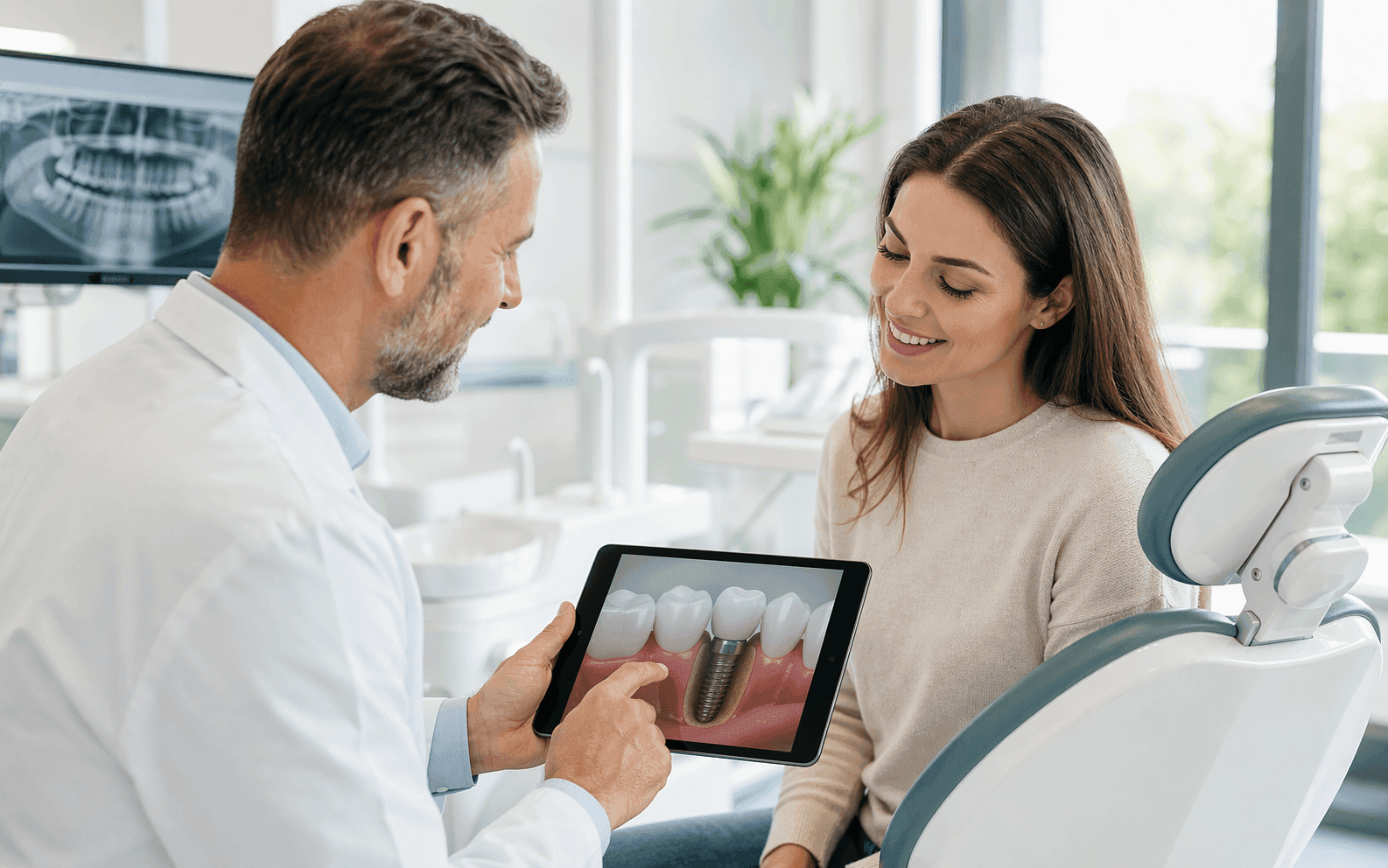
At Belgrade Smile Center, a single dental implant with a zirconia or porcelain crown costs between €800 and €1,400, with a typical all-in price around €1,050. That includes the titanium implant body, the abutment, and the final crown — everything you need for a complete, functional tooth.
How Does That Compare to Other Countries?
- Germany: €2,000 – €3,500 per implant
- Switzerland: CHF 2,500 – CHF 4,500 per implant
- United Kingdom: £1,500 – £2,800 per implant
- United States: $2,500 – $5,000 per implant
- Hungary: €1,000 – €1,600 per implant
- Turkey: €500 – €900 per implant
- Serbia (Belgrade): €800 – €1,400 per implant
On a case requiring six implants, a patient from Germany could save €6,000 to €15,000 by choosing Belgrade instead — enough to cover flights, a week in a good hotel, and meals, with significant savings left over.
What Is Included in the Serbia Price?
This is where the comparison gets more nuanced. In some lower-cost markets, a headline price may exclude the crown, the abutment, or diagnostic imaging. At a properly structured clinic in Belgrade, your treatment plan should clearly specify:
- CBCT or panoramic X-ray and full digital diagnostic workup
- Consultation and treatment planning session
- The implant body itself (premium brands: Straumann, Nobel Biocare, or equivalent)
- Healing period follow-up within the same visit where possible
- Abutment and final crown on the return visit
Always ask for a fully itemised quote before booking. Any clinic worth working with will provide one without hesitation.
What About Quality and Safety?
Serbian dentistry operates under European Union-aligned clinical standards. Many dentists trained at Western European universities or completed postgraduate specialisations abroad. The materials used — titanium implants, zirconia crowns — are the same brands available at top clinics in Germany or the Netherlands. The difference is overhead cost, not clinical standard.
That said, the quality of any clinic depends on the specific team, not the country alone. Research the credentials of the treating dentist, look for verifiable patient reviews, and prioritise clinics that offer a clear treatment plan before any money changes hands.
The Real Costs of Travelling for Dental Care
A fair comparison has to account for the full trip. For a patient travelling from Frankfurt to Belgrade, a realistic budget would include: return flights (€80 – €200), a comfortable hotel for 5–7 nights (€70 – €150 per night), meals, and local transport. Total trip overhead: approximately €700 – €1,600. Even with these costs included, the net saving on a six-implant case remains substantial.
Is It Worth the Trip?
For single-tooth cases, the maths is tighter — you may save €1,000 to €2,000 after travel costs. For complex cases involving multiple implants, full arch reconstruction, or combined implant and crown work across multiple teeth, the economics are clearly in favour of travelling. Most patients who make the trip once become returning patients.
The quality of the experience — not just the price — matters too. Belgrade is a European capital with good restaurants, walkable neighbourhoods, and a culture that is genuinely welcoming to international visitors. Spending a recovery week there is not a compromise. For many patients, it becomes a highlight.