Breast Augmentation Abroad: Safety Standards and How to Choose a Clinic
Breast augmentation is the most commonly performed aesthetic surgery abroad. Understanding safety standards, implant certification, and how to evaluate a surgeon is essential before you book.
Breast augmentation is one of the most frequently performed aesthetic surgical procedures in the world, and a significant proportion of patients now travel abroad for the procedure. In Serbia, the cost ranges from approximately €2,500 to €4,500, compared to €7,000 – €14,000 in Germany, Switzerland, or the UK. The savings are meaningful — but so is the importance of choosing the right clinic and understanding what safety actually means in this context.
Implant Certification: What to Look For
The most important safety factor in breast augmentation is the quality of the implant being used. Look specifically for implants certified by the European CE marking under the Medical Devices Regulation (MDR), or — for patients from the US — FDA-cleared devices. The two most widely respected brands are Mentor (Johnson & Johnson) and Motiva. Allergan (now AbbVie) Natrelle implants are also widely used.
Ask the clinic directly: what brand and model of implant will be used, and can you provide documentation of their CE or MDR certification? A reputable clinic will answer this without hesitation.
Surgeon Credentials
The surgeon performing your procedure should be board-certified in plastic or aesthetic surgery through a recognised body. In Serbia, this is the Serbian Association of Plastic, Reconstructive and Aesthetic Surgeons (UDPRAS). Many Serbian surgeons also hold memberships in the International Society of Aesthetic Plastic Surgery (ISAPS) or the European Association of Plastic Surgeons (EURAPS). These affiliations are a meaningful indicator of training standards and ongoing education.
Facility Standards
Breast augmentation should only be performed in an accredited surgical facility — not in a clinical office. Confirm that the clinic operates a licensed operating theatre with general anaesthesia capacity, and that a qualified anaesthesiologist will be present throughout the procedure. In Serbia, licensed surgical facilities are registered and inspected by the Republic Health Insurance Fund.
The Consultation Process
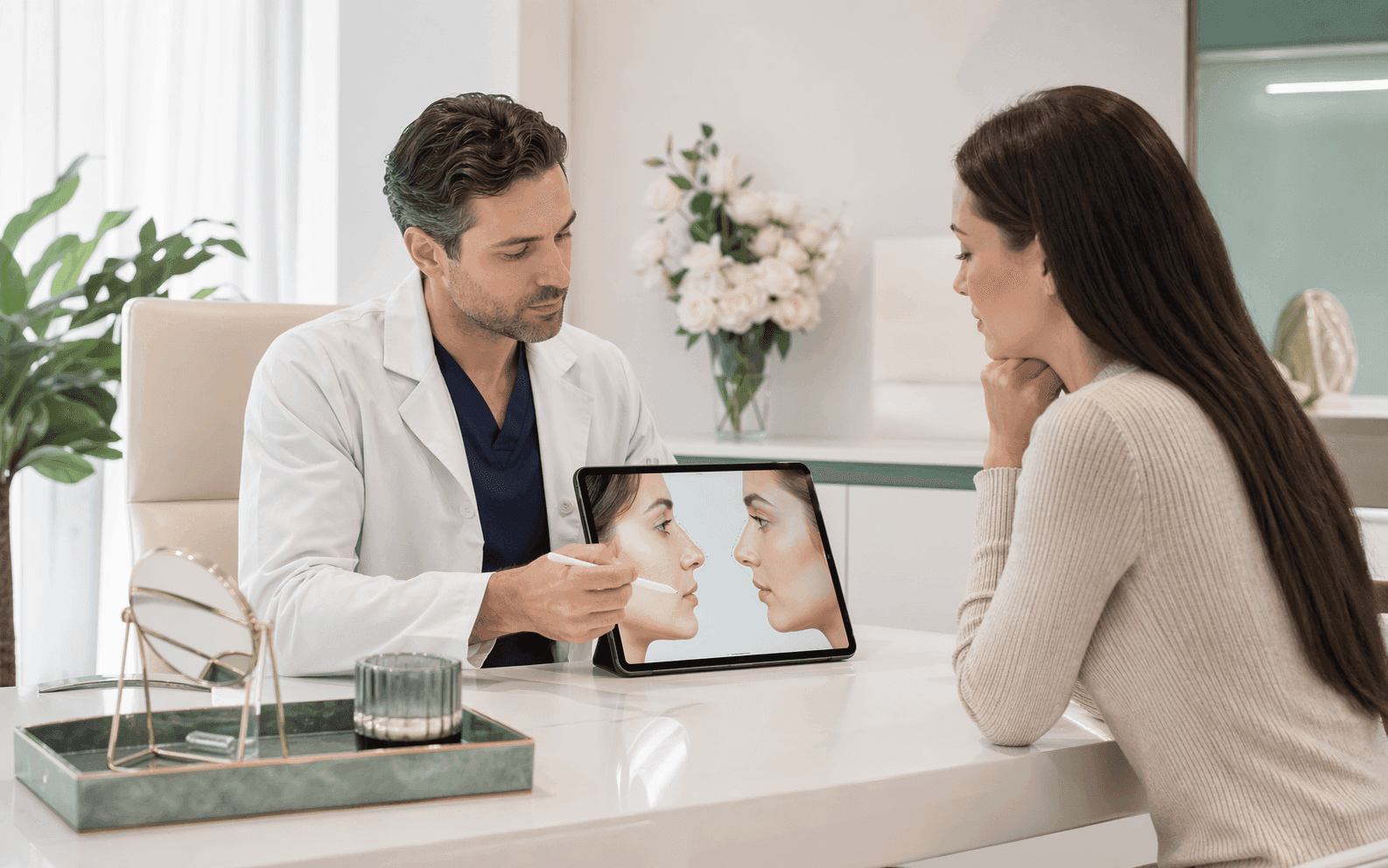
A responsible surgical consultation involves a thorough medical history review, discussion of your goals and realistic expectations, examination of tissue characteristics and chest anatomy, and a clear recommendation on implant size, profile, and placement. Any surgeon who prescribes an implant size in a five-minute consultation — or who does not ask about your medical history — is not approaching the procedure with appropriate care.
Recovery Timeline in Belgrade
- Day of surgery: rest, drainage if applicable, stay at hotel or clinic
- Days 1–3: some discomfort and tightness, managed with prescribed pain relief
- Days 3–5: most patients are comfortable walking and moving around
- Day 7: follow-up appointment, typically with dressing check
- 2–4 weeks: avoid upper body exercise and lifting
- 6 weeks: most normal activity resumed; final result visible at 3–6 months
Planning the Combined Trip
Most patients planning breast augmentation in Belgrade stay for 7–10 days. This allows for the pre-operative consultation, a day before surgery for rest and preparation, the surgery itself, and a comfortable recovery period with the follow-up appointment before returning home. Belgrade's central neighbourhoods are well-suited to a low-activity week — good hotels, accessible restaurants, and a city that does not require much walking if you prefer to rest.